
You crack a jar, expecting loud terps, and something feels… off. Maybe it’s a damp-basement note. Maybe the bud looks a little dull, like it’s wearing a dusty sweater.
This is one of those moments where being picky is smart. Moldy cannabis flower can irritate your lungs, trigger allergies, and hit harder if you’re immunocompromised.
Harm-reduction disclaimer: This article is for education only, not medical advice. Do not smoke, vape, dab, or ingest cannabis you suspect is moldy. If you feel unwell after exposure, contact a clinician.
Why mold on dried flower is a bigger deal than “grossâ€
Mold isn’t just a bad taste problem. Cannabis flower can carry molds and mildews that grow when moisture, warmth, and limited airflow line up. Even when growth looks small, spores can spread through the jar, and some molds can leave behind irritants or toxins.
Regulated markets often test flower for microbial contamination (commonly reported as total yeast and mold count, TYMC). Limits vary by state, and a “pass†doesn’t mean you should ignore obvious signs. If your nose and eyes say “mold,†treat it as unsafe.
For growers and processing teams who want a more formal disease overview, British Columbia’s agriculture factsheet covers common cannabis diseases, including bud rots and post-harvest molds: diseases of cannabis in British Columbia (PDF).
The 7 smells and visual clues that matter (and what they usually mean)
1) Musty “old basement†smell (often with hidden fuzz)
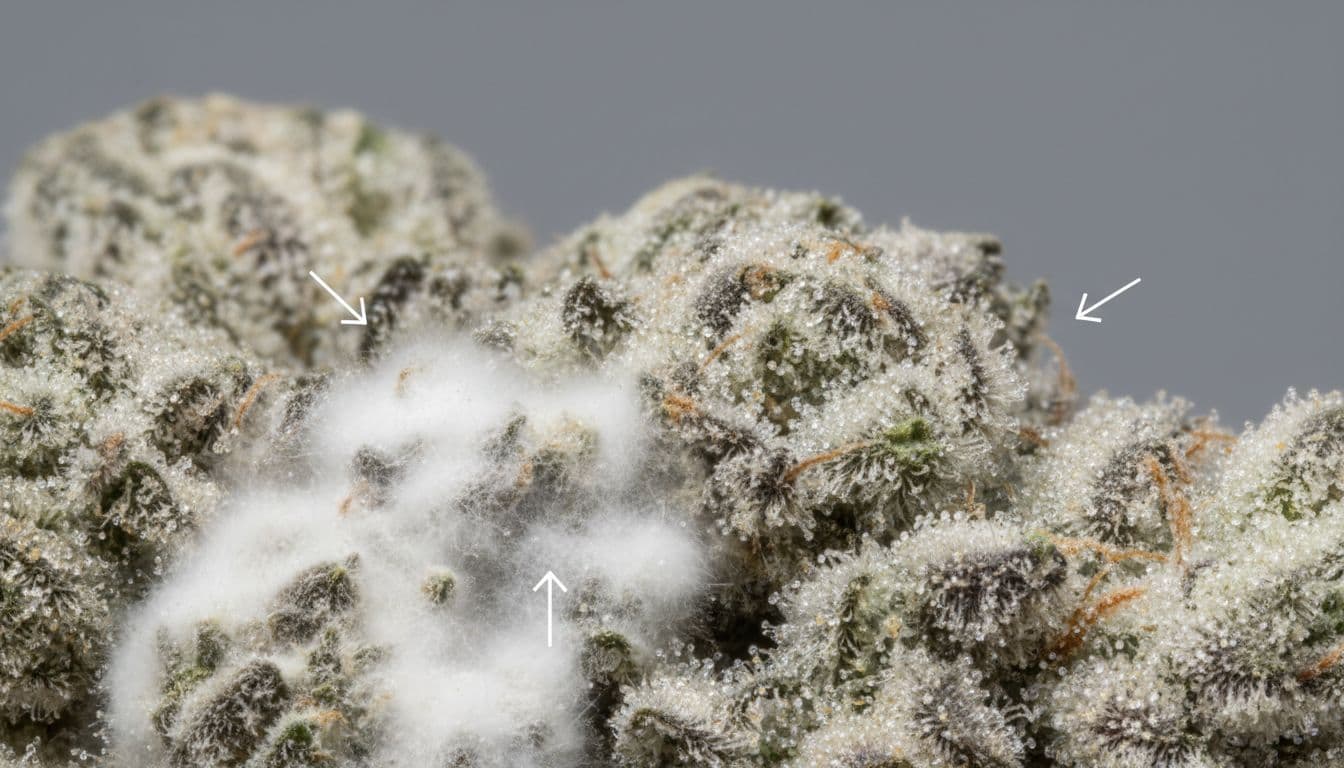
Healthy flower can be earthy, skunky, fruity, gassy. Mold tends to read as damp, stale, and flat, like a storage room that never dries out. If that mustiness hits you right away, stop and inspect.
Smell tip: don’t take a deep inhale from the jar. Crack the lid and waft air toward your nose.
2) Wet cardboard or “damp paper†odor (a storage red flag)
This often shows up when flower sat too humid, or had condensation inside the container. Visually, you might not see much at first, which is why this smell matters. If it reminds you of a soggy moving box, treat it like a warning siren.
3) Wet hay smell plus dull-looking bud (cure and moisture trouble)
“Hay†can happen with a rushed dry, but wet hay paired with a soft bud can signal ongoing moisture and microbial growth. Look for areas that seem matted, not sparkly, and check the inner bud.
If you want a solid baseline on what good drying and curing should look like, Leafly’s guide is a helpful reference: drying and curing cannabis.
4) Powdery film that wipes off (powdery mildew vibes)
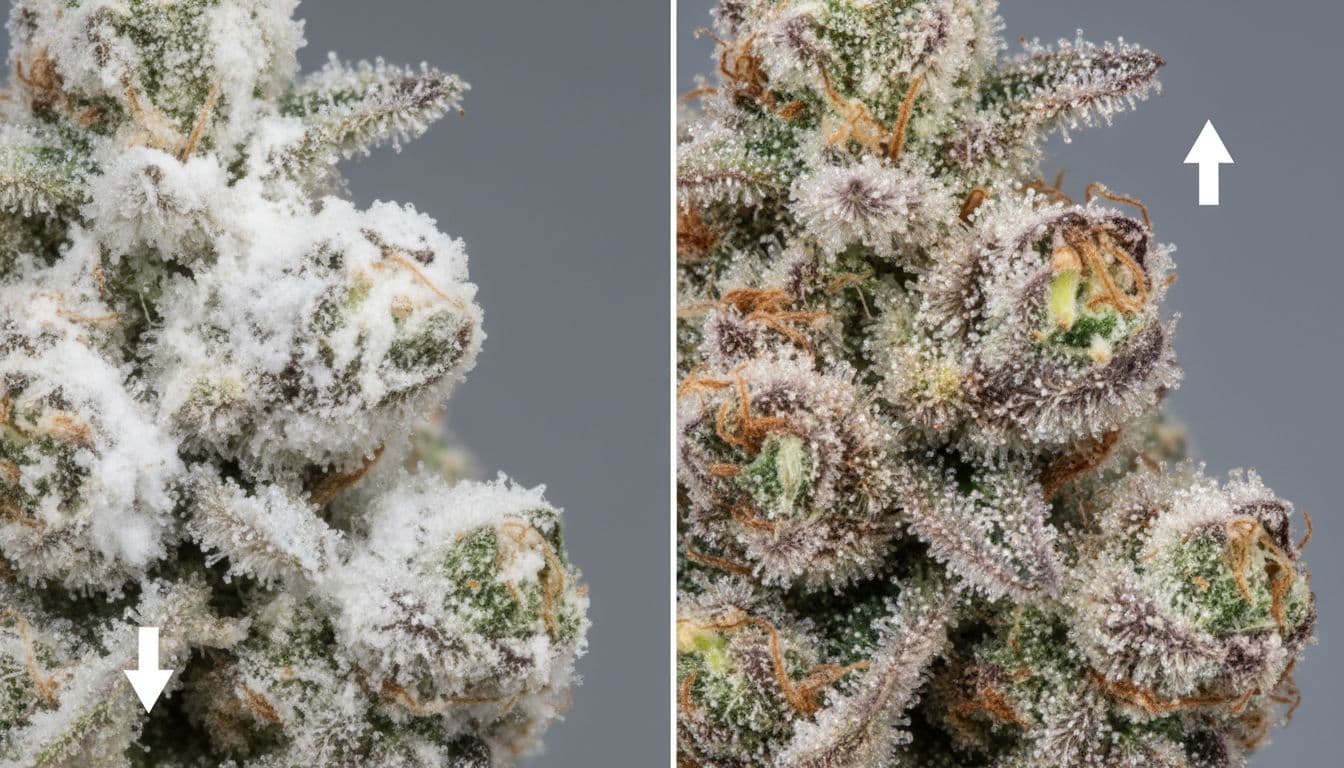
A key confusion point is “white stuff.†Trichomes look like tiny crystals with sparkle. Mold or mildew looks dull, dusty, or flour-like, sometimes sitting on the surface like chalk.
If you gently touch a suspicious spot with a clean tool and it smears like powder, don’t use it.
5) Darkened or brown interior (bud rot hiding in plain sight)
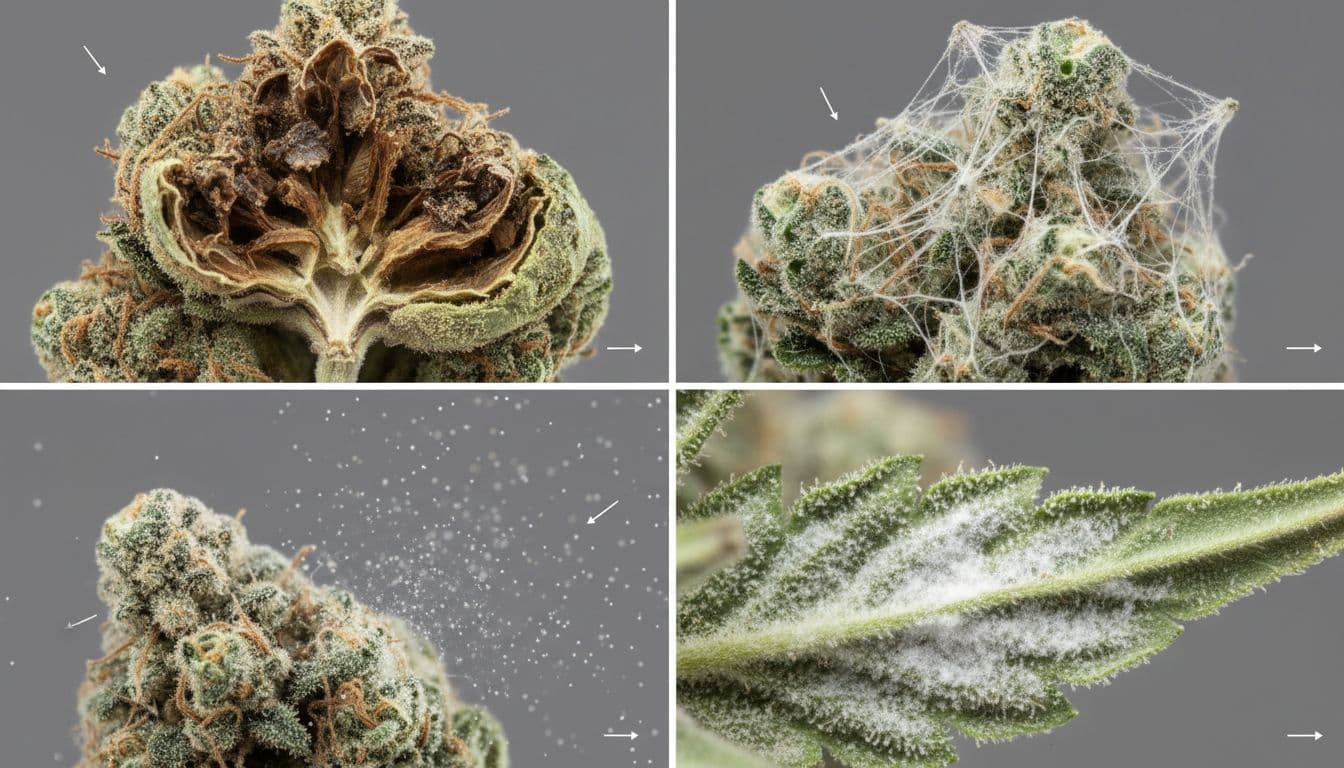
Some of the worst mold isn’t on the outside. Dense buds can look fine until you break them open. If the center is brown, gray, or oddly dark, or the texture shifts to crumbly mush, treat it as contaminated.
A related clue: when you crack a bud and see a tiny “puff†of dust, that can be spores.
6) “Old socks†or dirty laundry smell (mildew-type funk)
This is different from “skunk.†Skunk is sharp and lively. Laundry funk is sour, sweaty, and stale. If the smell makes you pull your head back, listen to that reaction.
Leafly has a practical rundown of off-putting odors and what they can signal: what cannabis should not smell like.
7) Ammonia or sharp sour-rot note (stop and isolate)
An ammonia-like smell, or a sharp sour note like something rotting in a sealed container, is another “don’t negotiate with it†clue. Pair that with any slick feel, lingering dampness, or webby strands and you have enough reason to treat it as unsafe.
What to do next (step-by-step, no guesswork)
Step 1: Isolate it fast
Seal the jar or bag, and keep it away from other flower and tools. Cross-contamination is real, especially if you’re storing multiple strains together.
Step 2: Inspect under bright light and magnification
Use a strong flashlight and one of these:
- A jeweler’s loupe (30x to 60x)
- A phone camera zoom plus good lighting
Check creases near stems and the inner bud. Mold likes hidden pockets.
Step 3: Do a safer smell check (no deep inhalation)
Open the container briefly and waft. If you get musty, damp, sour, or laundry notes, stop there.
Step 4: Don’t try to “save†it for smoking or eating
If you suspect moldy cannabis flower, don’t smoke, vape, or cook with it. Home processing does not reliably remove contaminants, and it can concentrate them in extracts or butter.
Step 5: Contact the dispensary or producer (if purchased)
Take clear photos in bright light and note:
- Batch or lot number (if you have it)
- Purchase date and storage conditions
- What you observed (smell, visual, texture)
Ask about their return policy and any available lab results.
Step 6: Clean containers and tools safely
After discarding contaminated flower (sealed in a bag so it doesn’t spread):
- Wash jars and grinders with hot soapy water, then rinse well.
- Sanitize with 70% isopropyl alcohol (wipe and air-dry) or a food-safe sanitizer used as directed.
- Let everything dry fully before reuse.
If you have asthma, allergies, or a compromised immune system, consider wearing a mask while handling suspected mold.
The mold myths that get people hurt (or just waste their money)
Myth: “Just pick off the moldy part.â€
Mold can spread beyond what you see. The “clean†part may not be clean.
Myth: “Microwaving or heating kills it, so it’s fine.â€
Heat may not eliminate all spores, and it doesn’t reliably remove leftover toxins. It also doesn’t fix the inhale risk.
Myth: “I’ll turn it into edibles or extracts.â€
Consumer-level extraction and cooking are not reliable cleanup methods. Some processes may carry over or concentrate contaminants.
How to prevent mold in cannabis flower (storage that actually works)
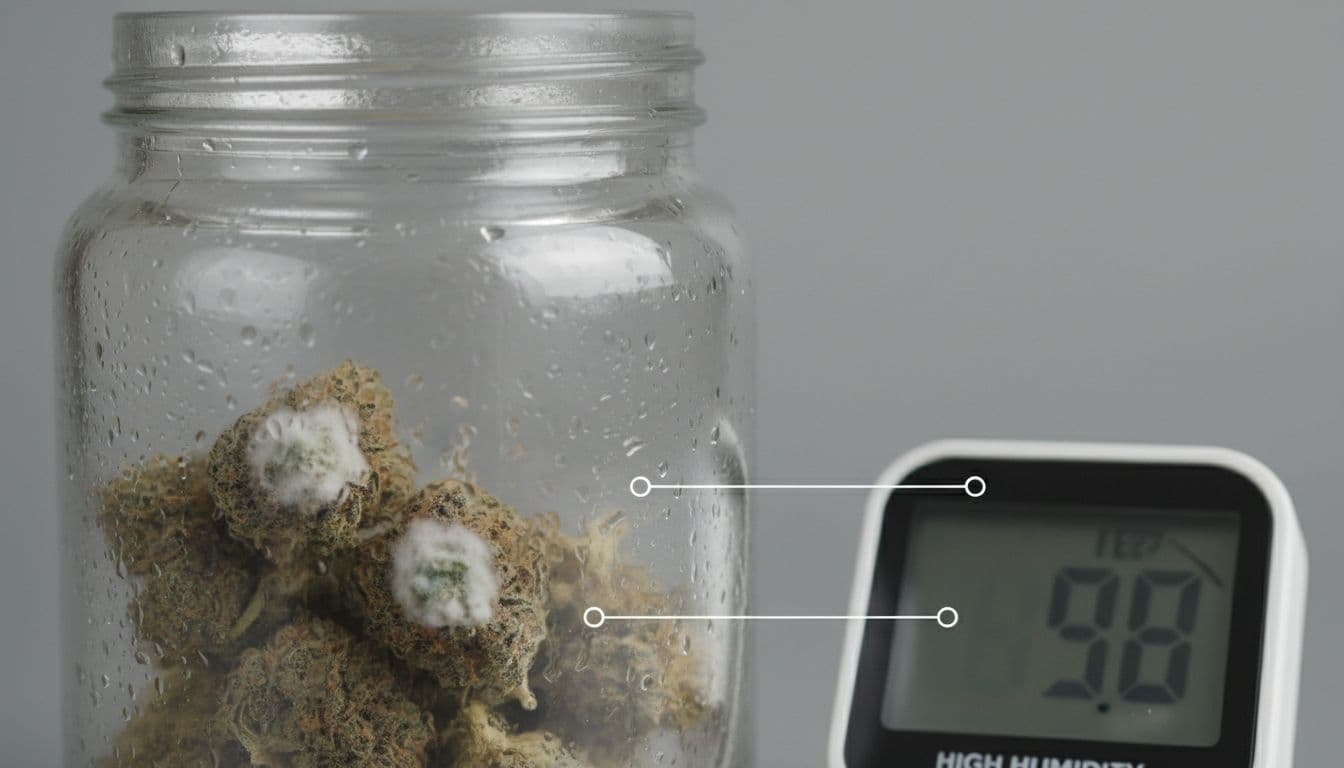
Aim to store flower around 55% to 65% relative humidity, with many people targeting about 60% RH for a balance of freshness and mold prevention. Once you get above roughly 70% RH, mold risk climbs fast.
A simple setup:
- Airtight glass jar (clean and dry)
- Small hygrometer inside the jar
- Two-way humidity pack (commonly 58% or 62%, based on preference)
- Cool, dark storage area (around 60 to 70°F helps)
Avoid the fridge. Temperature swings can cause condensation, which is like leaving a puddle inside your jar.
Quick checklist: suspect mold, do this now
- Stop use immediately (don’t smoke, vape, or eat it)
- Seal and isolate the product from other flower
- Inspect under bright light and magnify the inner bud
- Waft-smell only, watch for musty, damp, sour, or laundry odors
- Document with photos, keep packaging and lot info
- Contact the retailer or producer for next steps
- Clean and sanitize storage jars and tools, dry fully
- Reset storage to about 55% to 65% RH and stable cool temps
Trust your senses. When it comes to moldy cannabis flower, the safest “maybe†is still a no.