
Ever buy two products with the same THC percent and get two totally different experiences? That’s the gap a Certificate of Analysis (COA) can help close, if you read it like a recipe instead of a scoreboard.
The trick is focusing on cannabinoid ratios COA data gives you, not just “how strong is it.†Ratios let consumers compare batches, help budtenders make cleaner recommendations, and give formulators a repeatable target for a specific vibe people report, like “clear-headed,†“balanced,†or “nighttime.â€
Why ratios beat single numbers for “entourage†goals
Think of cannabinoids like instruments in a band. THC might be the loudest, but CBD, CBG, CBC, and CBN can change the feel of the whole track even at lower levels. When people talk about “entourage effect,†they usually mean the combined, layered experience of cannabinoids plus terpenes, not a single molecule doing all the work. A helpful overview of the research (and its limits) is in this review on the entourage effect in cannabis products.
Ratios matter because they’re comparative. “10 mg THC†means little without context. “CBD:THC 5:1†tells you something about how THC might feel for that person, based on typical consumer reports.
What to verify on the COA before you trust the ratio
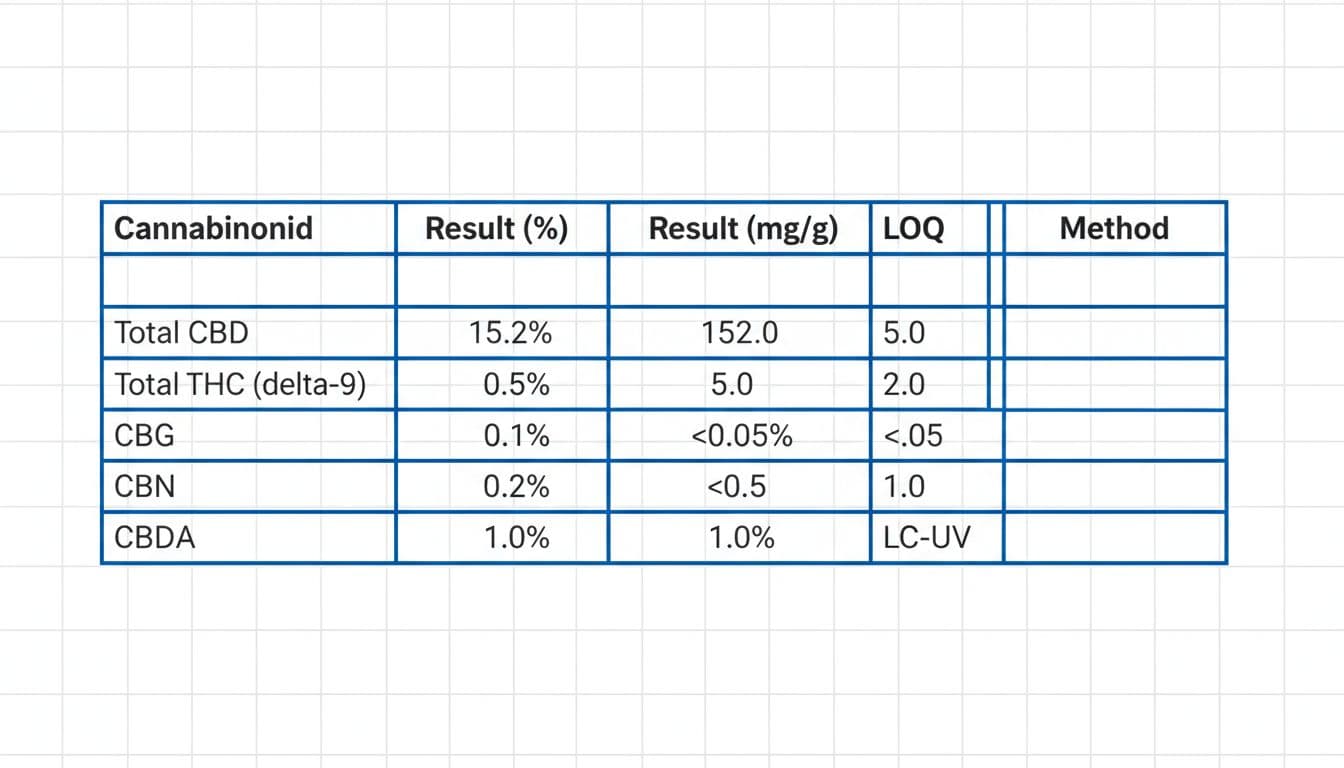
Before you calculate anything, confirm the COA is worth using.
Quick COA trust checklist
| COA item to check | What “good†looks like | Why it matters |
|---|---|---|
| Lab accreditation | ISO/IEC 17025 accredited lab | Better control of methods, calibration, and reporting |
| Sample and batch ID | Matches your product label | Ratios are batch-specific |
| Units | % and/or mg/g, and serving mg for edibles | You can’t compare apples to oranges |
| Method | HPLC is common for cannabinoids | Helps interpret acids (THCA, CBDA) |
| Date | Recent enough for that batch | Inventory can sit, COAs can get mixed up |
For accreditation, it’s smart to recognize bodies and programs tied to ISO/IEC 17025, like the A2LA cannabis testing laboratory accreditation program. For an example of a government lab describing its ISO/IEC 17025 status, see Health Canada’s Cannabis Laboratory. If you want a plain-language COA walkthrough, New York’s Office of Cannabis Management has a solid PDF on how to read a COA.
Turn COA potency numbers into ratios (step-by-step)
Ratios are only as good as the inputs. Start by standardizing what you’re comparing.
Step 1: Use the same basis
- Flower and concentrates often list cannabinoids as % by weight and sometimes mg/g.
- Edibles should be compared in mg per serving (and mg per package).
Helpful conversion:
- mg/g = % × 10 (because 1% = 10 mg per gram)
Step 2: Calculate “total†cannabinoids when acids are listed
COAs often list acidic forms (THCA, CBDA). When heated, they convert, losing mass as CO₂. That’s why you’ll see the 0.877 factor.
Common calculations used in hemp compliance and many COAs:
- Total THC = Δ9-THC + (THCA × 0.877)
- Total CBD = CBD + (CBDA × 0.877)
For hemp testing context and lab reporting expectations, see USDA AMS Laboratory Testing Guidelines.
Step 3: Build the ratio you actually care about
Most shoppers start with CBD:THC, but you can create others.
- CBD:THC ratio = Total CBD ÷ Total THC
- Minor-to-THC ratio (example) = CBG ÷ Total THC
- Minor “blend†ratio = (CBG + CBC + CBN) ÷ Total THC (useful for formulators)
Worked example (with real math)
Imagine a flower COA shows (all in %):
- CBD = 0.30
- CBDA = 9.00
- Δ9-THC = 0.35
- THCA = 0.80
- CBG = 0.90
- CBC = 0.25
- CBN = 0.05
-
Total CBD
Total CBD = 0.30 + (9.00 × 0.877)
Total CBD = 0.30 + 7.893 = 8.193% -
Total THC
Total THC = 0.35 + (0.80 × 0.877)
Total THC = 0.35 + 0.7016 = 1.0516% -
CBD:THC ratio
8.193 ÷ 1.0516 = 7.79:1 (round to ~8:1) -
“Minor-to-THC†snapshot (optional)
CBG:THC = 0.90 ÷ 1.0516 = 0.86:1 (close to 1:1)
This is the heart of cannabinoid ratios COA readers can use to compare products fast, even across strains and brands.
Ratio presets people shop for (and what they’re aiming for)
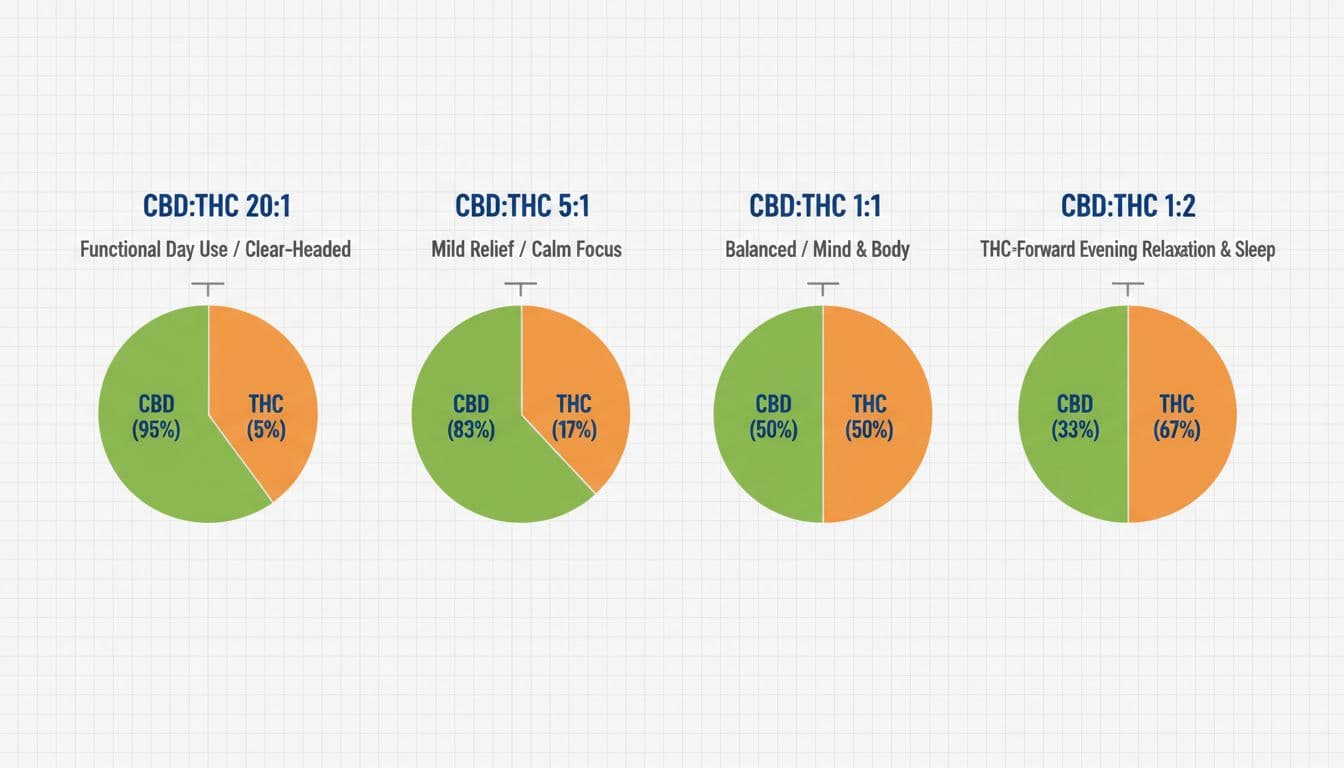
These aren’t guarantees. They’re just common targets tied to reported experiences and typical shopping goals.
| Target CBD:THC ratio | How it’s often described | Common shopping goal |
|---|---|---|
| 20:1 to 10:1 | “Functional,†low-intensity | Stay clear-headed, avoid a heavy high |
| 8:1 to 4:1 | “Chill but steady†| Take the edge off, keep control |
| 2:1 to 1:1 | “Balanced†| Even mix of CBD and THC character |
| 1:2 to 1:5 | “THC-forward†| Stronger psychoactive experience |
If you’re training staff, this table makes a good menu board. If you’re formulating, treat it like a starting spec, then tighten it by batch.
Build a custom entourage profile using ratios plus COA context
Ratios are the skeleton. The “feel†often comes from the rest of the COA and the product format.
Minor cannabinoids: pick one “support†target
Instead of chasing every cannabinoid, choose one minor target that matches your product story:
- CBG: often sought for “alert, daytime†goals
- CBN: often sought for “nighttime†goals
- CBC: often included for broader “full-spectrum†positioning
Terpenes: confirm the direction
A cannabinoid ratio can still feel different if the terpene profile shifts. If the COA includes terpenes, read them like seasoning. Lab summaries can help contextualize this, like ACS Laboratory’s overview of terpene synergy and entourage effect research.
Delivery changes the math you feel
- Inhalation tends to feel faster and more “peaky.â€
- Edibles feel slower and longer, and can surprise people at the same labeled mg.
- Decarb matters: a “high THCA†product behaves differently once heated.
A practical COA workflow (for consumers, budtenders, and QA)
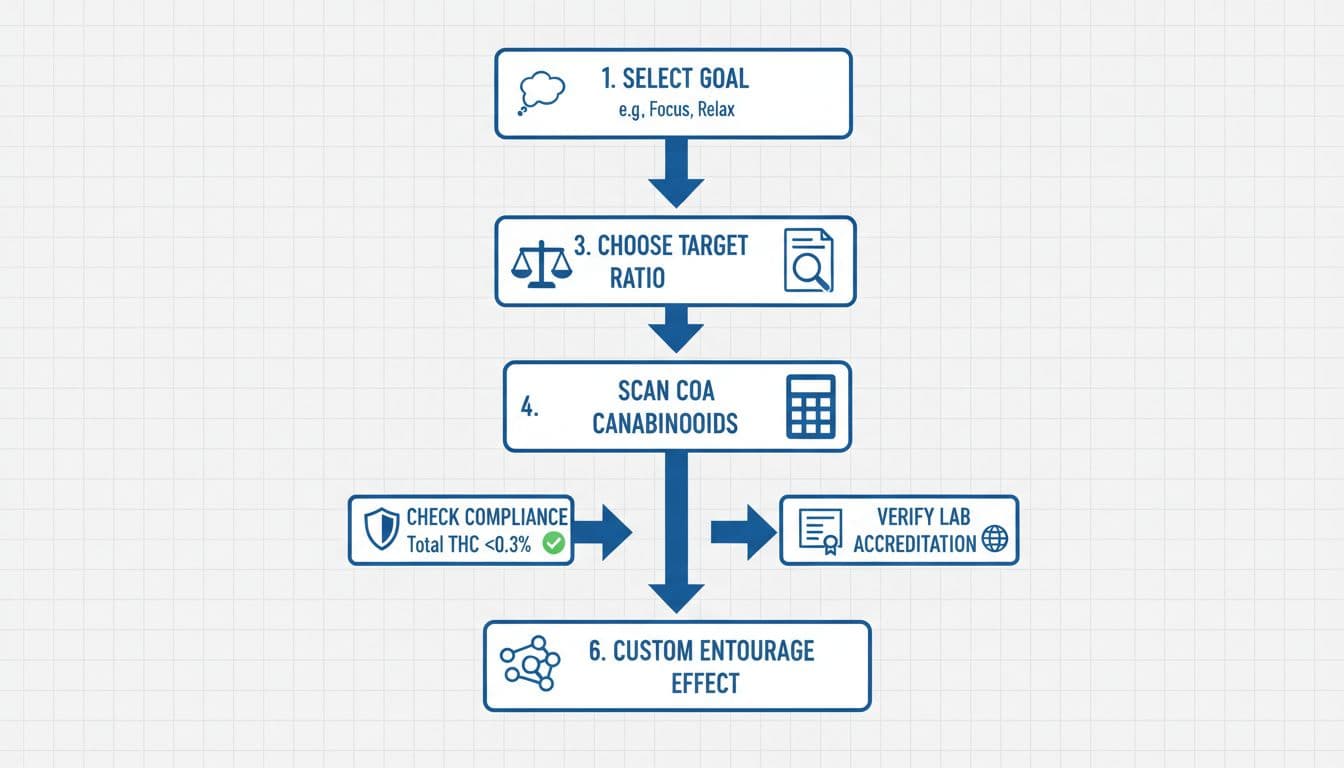
Use this repeatable flow:
- Pick a goal (daytime, balanced, THC-forward).
- Pick a target ratio range (example: CBD:THC 5:1).
- Calculate totals (include THCA and CBDA when present).
- Compare batches by ratio, not just percent.
- Check terpene direction if available.
- Confirm compliance items (especially for hemp or “low THC†claims).
Safety and compliance notes you shouldn’t skip
- Start low and go slow, especially with edibles.
- Impairment risk is real. Don’t drive or operate machinery after THC use.
- Drug tests: many tests look for THC metabolites, and CBD products can still contain THC depending on the formulation and label claim.
- Interactions: if you take meds or have health conditions, consult a clinician or pharmacist.
For hemp, remember the legal line is based on total THC, not just delta-9 THC. The common compliance approach uses Total THC = Δ9-THC + (THCA × 0.877), and USDA guidance is the best starting point for how labs report and support hemp testing, as covered in the USDA AMS lab testing guidelines. Also, as of late 2025, rules generally don’t mandate cannabinoid ratios, so brands and retailers set these “presets†as product design choices, not legal categories.
Conclusion
Reading cannabinoid ratios COA data gives you a simple way to predict how two “similar†products might feel different in real life. Once you can calculate total CBD, total THC, and a few key ratios, you can shop and formulate with more control and fewer surprises. Keep your math honest by using accredited labs and consistent units. Most important, treat ratios as a guide, then adjust with careful dosing and real-world feedback.