
Buying legal cannabis should feel like buying food with a nutrition label, not like rolling the dice. The fastest way to protect yourself is to verify two things before you pay: the cannabis lot number on the package and what the QR code pulls up online.
When they match, you can shop with more confidence. When they don’t, it’s a warning that the lab results you’re reading might not belong to the product in your hand.
What a cannabis lot number and QR code actually tell you
A cannabis lot number (sometimes called a batch ID or production batch) is the product’s traceable “group photo.†It ties that unit to a specific run of flower, pre-rolls, vapes, edibles, or concentrates made under certain conditions, on certain dates, from certain inputs.
The QR code is supposed to make that traceability easy at the counter. In most legal markets, it should lead you to a Certificate of Analysis (COA) or a verification page that shows:
- The same lot or batch number printed on your package
- The product name and type (for example, “live resin cartridge 1gâ€)
- Test dates and lab name
- Potency results and required safety screens (varies by state)
Think of it like a boarding pass. The QR code gets you to the gate, but the lot number is the name on your ticket. If the name doesn’t match, you don’t get on the plane.
A 2-minute lot number and QR code check you can do at the counter
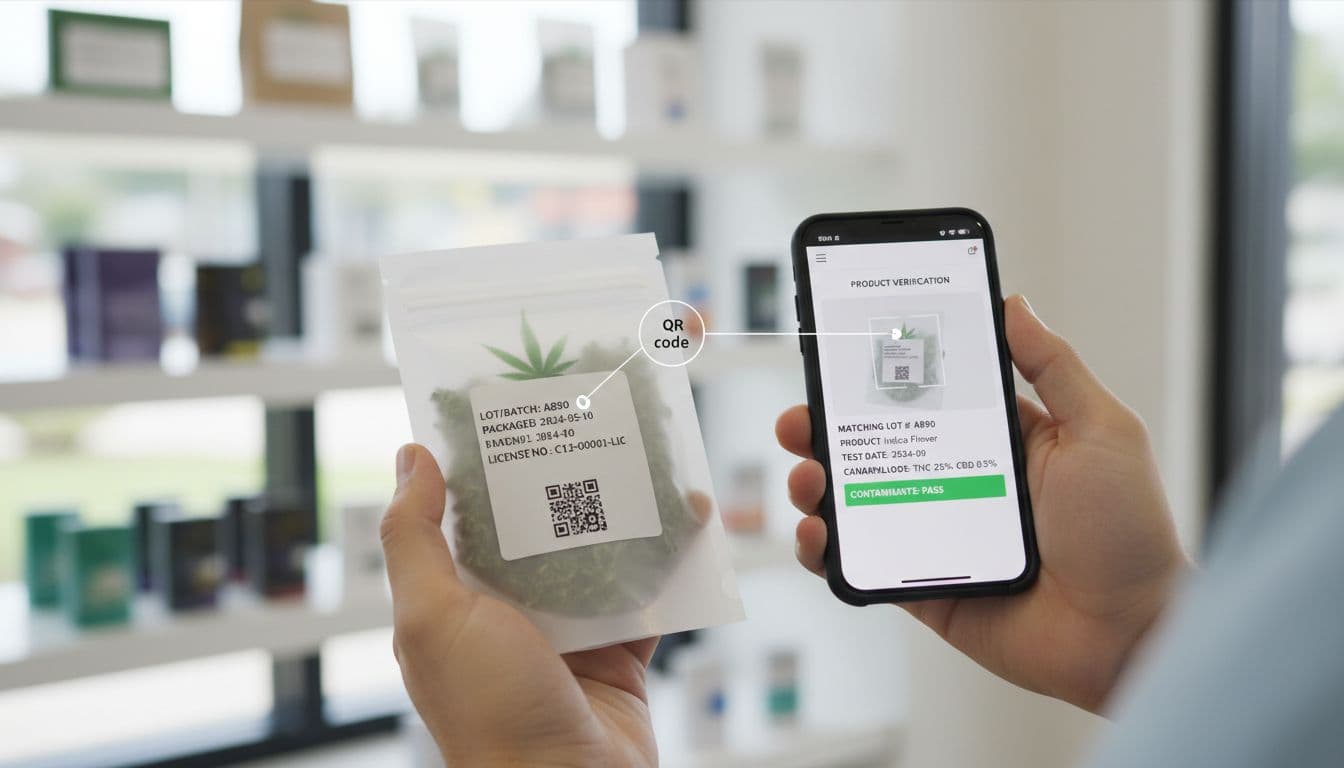
Step 1: Find the lot number on the physical package
Look for “LOT,†“BATCH,†“Batch No.,†or similar text. It’s often near the packed-on date, manufacturer info, or compliance label.
If you can’t find any lot number on a legal-market package, treat that as a problem, not a mystery.
Step 2: Scan the QR code with your phone camera
Most phones can scan QR codes from the camera app. You want a result that opens quickly and looks like a record, not a marketing page.
Step 3: Confirm the link goes somewhere credible
A good QR destination usually has one of these traits:
- It’s hosted by the lab, a recognized COA platform, or an official traceability partner
- It shows a unique report page, not just a downloaded image
- It has clear identifiers (report ID, lab name, test date)
If you want a reference for what “good†looks like, Metrc’s guide to how to read a COA and why Retail ID helps explains the key sections that should be easy to spot.
Step 4: Do the “match test†on a few key fields
You don’t need to read every line. You need to match the identity fields first.
| Checkpoint | What you’re comparing | What should happen |
|---|---|---|
| Lot or batch number | Package vs COA page | Exact match (same characters) |
| Product name/type | Package vs COA page | Same product category and description |
| Package size | Package vs COA page | Same weight/volume when listed |
| Test date | COA page | Reasonable for the product’s shelf life |
| Lab name | COA page | Clear lab identity, not blank or hidden |
Step 5: Only then glance at potency and pass/fail
Potency tells you “how strong.†Pass/fail tells you “did it clear the safety screens required for that market.†If the report doesn’t show pass/fail style results for required contaminant panels, ask why.
How to read the COA fast (without staring at it for 10 minutes)
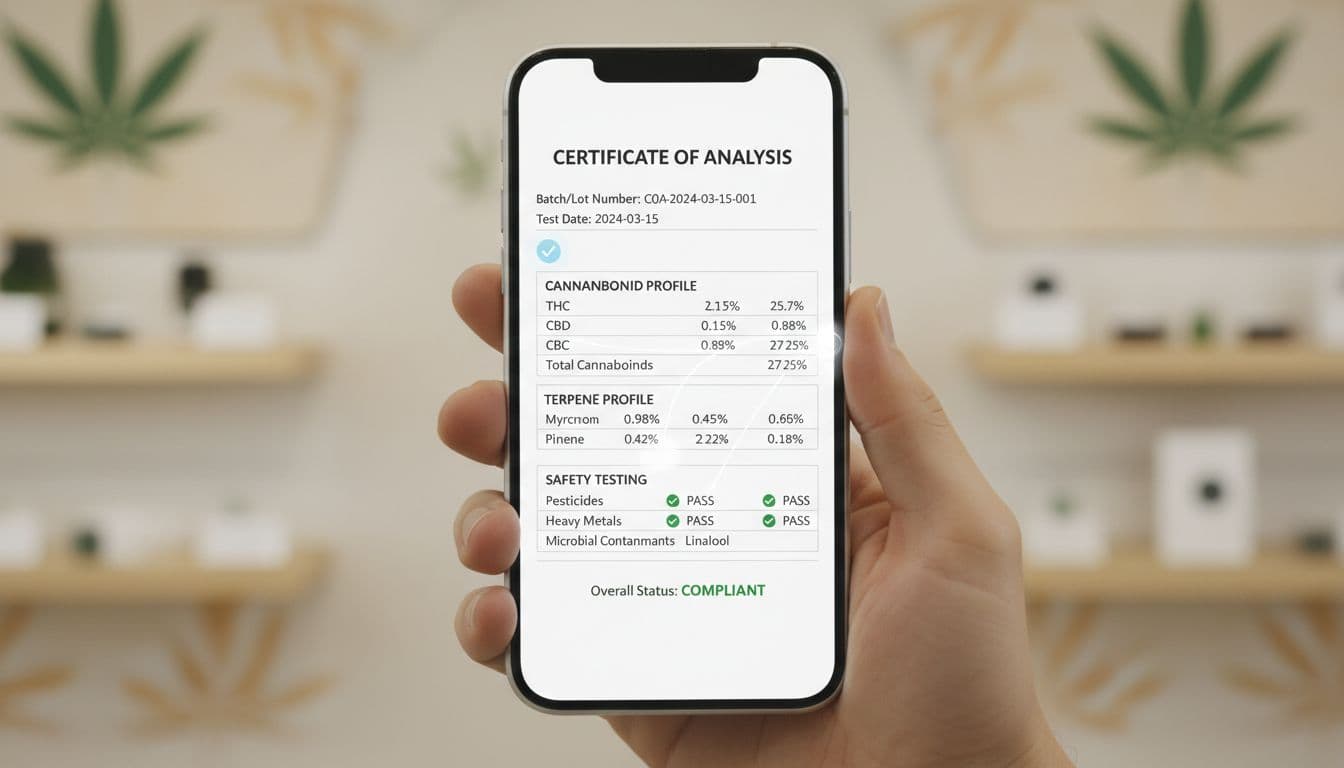
A COA is basically a report card, but the grading categories matter. Read it in this order:
1) Identity first
Start with lot number, product name, sample ID, and test date. If the identity is off, the rest is noise.
2) Potency second
Look for total THC and CBD (and sometimes THCA, CBDA). Keep in mind: methods vary, and flower numbers don’t translate directly to edibles or vapes.
3) Safety screens third
Depending on product type and state rules, you may see categories like pesticides, heavy metals, microbes, residual solvents, and mycotoxins. You’re looking for “Pass†and a clear set of results.
For a simple walkthrough with patient-friendly language, CED Clinic’s guide on how to read a cannabis COA lays out what each section usually means.
Red flags that the QR code or COA might be unreliable
Most issues show up the moment you try to verify. Watch for these common red flags:
- The QR code goes to a brand homepage, a generic menu, or a dead page
- The COA is a screenshot-style PDF with no way to confirm it online
- The COA page loads, but the lot number field is missing
- The report shows a different product type (for example, your vape pulls up an edible COA)
- The test date is extremely old for something marketed as fresh
- The lab name is unclear, or the report looks edited
If you want a deeper checklist of “this looks off†patterns, Arvida Labs’ write-up on COA red flags in lab results is a solid reference.
What to do when the lot number or QR code doesn’t match
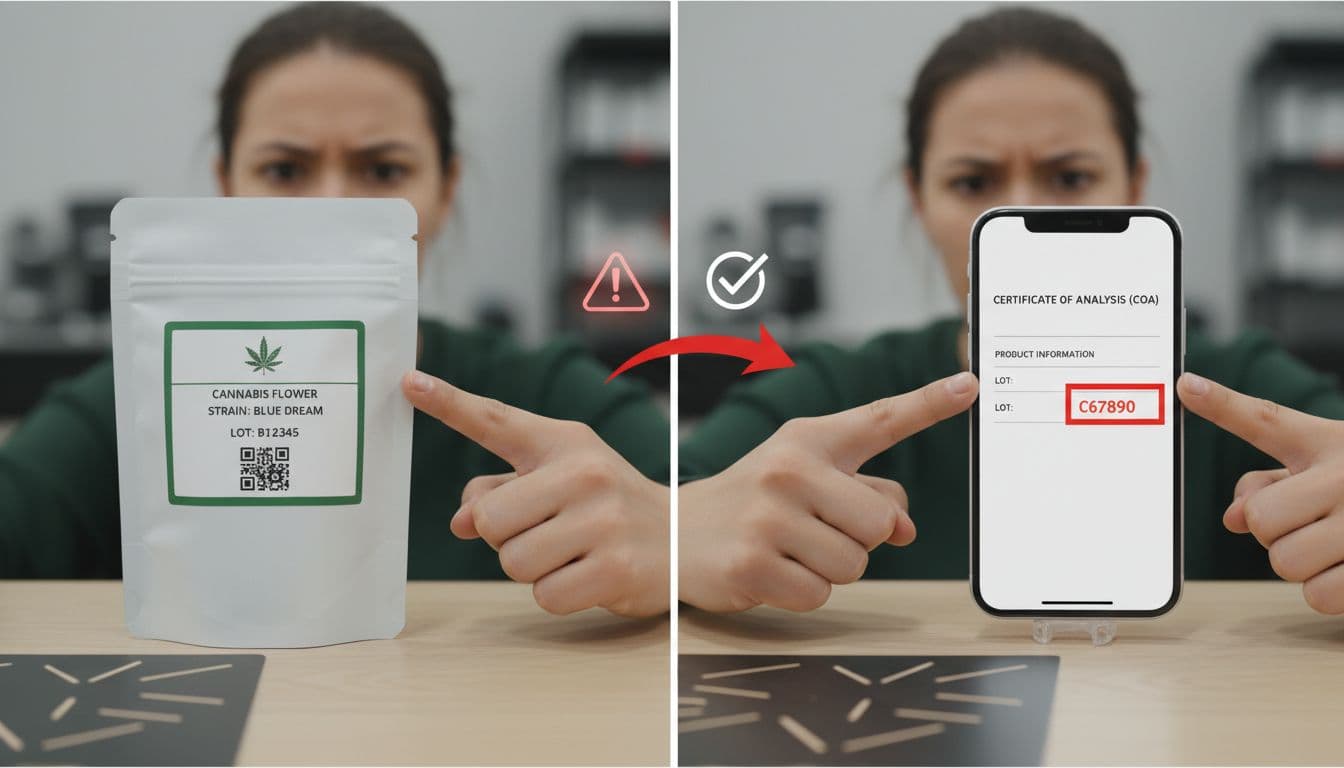
A mismatch usually has one of two explanations: an honest inventory labeling mistake, or a COA being reused in a way it shouldn’t be. Either way, treat it the same in the moment.
If you haven’t bought it yet
- Don’t purchase that unit. Ask to see a different unit of the same product and repeat the scan.
- Ask the budtender to pull the COA in their system (many shops can).
- If they can’t produce a matching COA, choose another product from a brand with cleaner traceability.
If you already bought it (and noticed at home)
- Don’t use it until you get clarity. The COA might not describe what you have.
- Take clear photos of the package showing the lot number and QR code result.
- Contact the dispensary right away and ask for a COA that matches your exact lot number.
- If the QR code points to a lab, you can also ask the lab to confirm authenticity. Some labs publish consumer tools, like SC Labs’ COA verification page, where you can compare a report against their records.
If the seller brushes it off, escalate. In regulated markets, you can report concerns to the state cannabis regulator or consumer complaint channel. Keep your receipt and photos.
Tips for budtenders and retail teams (so this doesn’t turn into a standoff)
A lot-number check shouldn’t feel like an interrogation. Small habits make it smoother:
- Keep store WiFi available, QR checks fail when signal is weak.
- Train staff on where each brand prints the cannabis lot number. Placement varies.
- If a customer finds a mismatch, treat it like a quality issue, not a personal challenge.
- Offer to swap for a unit with a matching COA, then flag the questionable stock for a manager review.
Trust is a repeat-sales strategy, and it’s also basic consumer safety.
Conclusion
A quick scan and a quick match can save you from buying the wrong thing, or buying something you can’t verify. Make the cannabis lot number your anchor point, then use the QR code to confirm the COA is tied to that exact batch. When something doesn’t match, don’t rationalize it away. Ask, verify, and walk if you need to.