
If you use vape carts, you have probably heard whispers about cannabis vape heavy metals. It sounds scary, but it does not have to turn every puff into a panic.
The real story is more practical. Some vape hardware can shed tiny bits of metal into the oil and the vapor you inhale. Other devices are designed to keep metal away from your lungs as much as possible. The trick is knowing which is which before you buy.
This guide breaks down how metals get into vapes, what 2025 testing really covers, and simple checks you can use in a shop or online to choose safer hardware.
Educational only: This article is for general information, not medical, diagnostic, or legal advice.
How Heavy Metals Get Into Cannabis Vapes
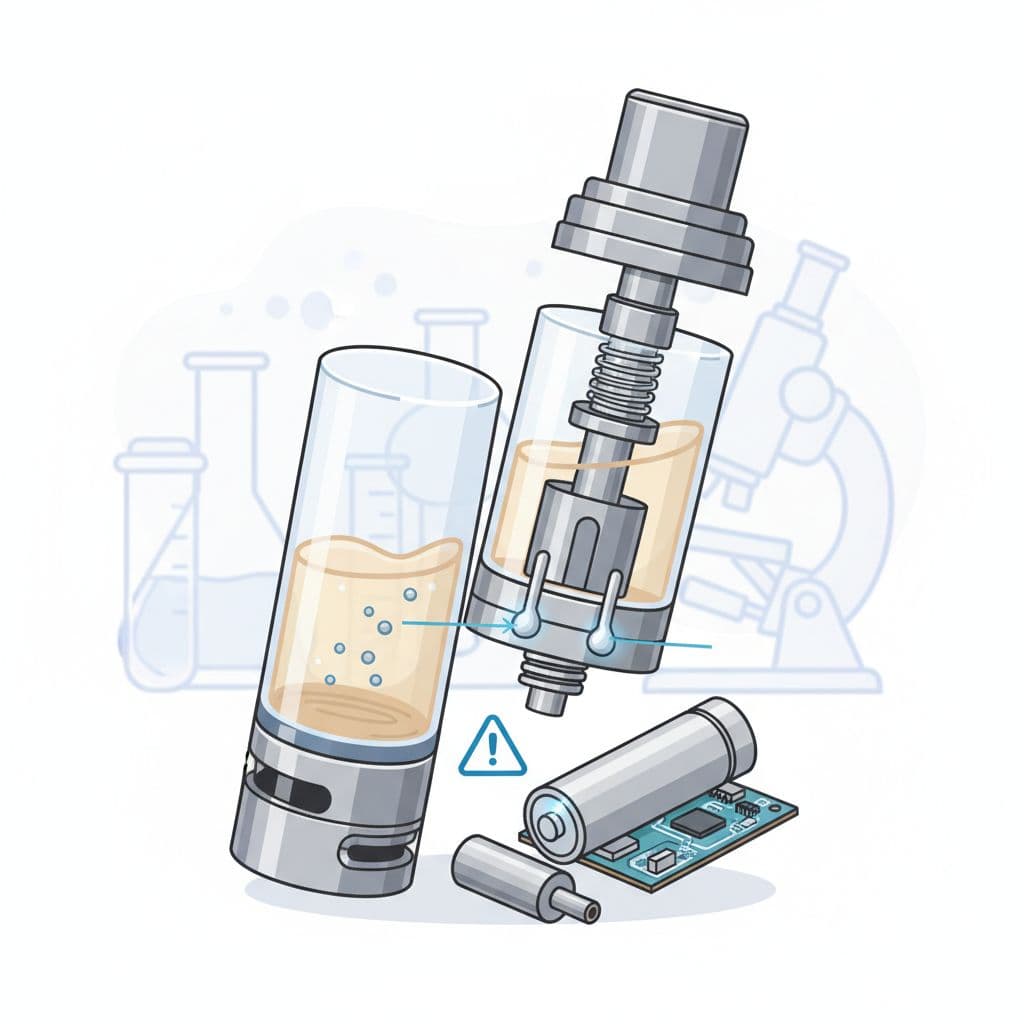
Image generated by AI showing internal vape components and where heavy metals can leach into oil.
At a glance, a cart looks simple: a glass or plastic tank, a mouthpiece, and a battery. Inside, things get busy. You have a coil or heating element, metal posts, solder joints, and seals that hold it all together.
Recent research from the American Chemical Society found toxic metal particles in cannabis vapes even before first use. A 2025 study in Scientific Reports tracked metals such as lead, nickel, and chromium moving from hardware into oils and aerosols across different products and brands, with big differences between devices and batches link: Scientific Reports study.
Here are the main ways metals show up:
- From the hardware itself: Cheap metal alloys, brass parts with added lead, and poorly chosen solder can shed metals when heated.
- From long contact with oil: Oil sits against metal parts for weeks or months. Acids and terpenes in the oil can pull metals into the liquid over time.
- From hot, hard use: Higher temperatures and long sessions can release more particles from the coil and surrounding parts.
Scientists and regulators focus on metals like lead, cadmium, arsenic, nickel, and chromium, because long-term inhalation is linked to lung, kidney, and nervous system harm in other settings. You do not need to memorize every element, but you do want to know how to avoid the worst hardware.
What Testing Rules Cover In 2025 (And What They Miss)

Photo by Jonathan Cooper
In North America, heavy metal testing is a work in progress.
- Canada uses a federal system under the Cannabis Act. Licensed products must meet national safety rules, and lab testing for metals is part of that system. Labels and packaging follow strict rules laid out in Health Canada’s packaging and labeling guide.
- The United States relies on state rules. Most legal states now require heavy metal testing for cannabis products, but the test panels, limits, and timing differ from state to state.
Across both countries, labs usually test for at least four metals: lead, cadmium, arsenic, and mercury. Some programs add nickel, chromium, or others, but many do not.
There are also gaps:
- Some producers only test the oil before filling carts, not the finished cartridge with the metal hardware.
- Rules do not always cover every metal that researchers are now finding in aerosols.
- Enforcement is stronger for licensed products than for grey-market or illegal vapes.
So a “tested†claim is a good sign, but it is not the end of the story. You still want to check how and what was tested, and you want to size up the hardware itself.
High-Risk vs Safer Vape Designs And Materials
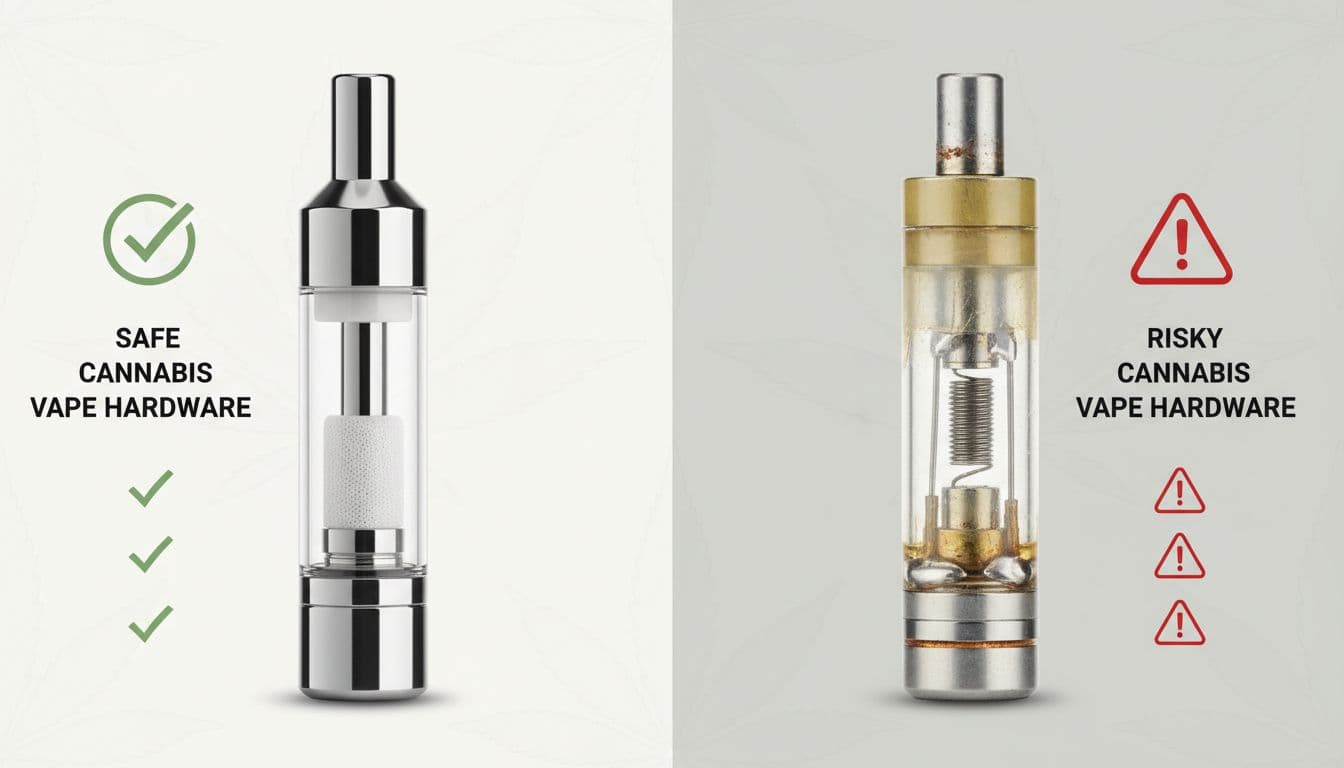
Image generated by AI comparing safer and higher-risk vape hardware designs.
The hardware itself can tell you a lot, even before you see a lab report. Industry experts have started to outline best practices for safer designs, such as in this hardware selection guide in Cannabis Science and Technology.
Use this table as a quick cheat sheet:
| Feature | Higher-risk signs | Safer signs |
|---|---|---|
| Tank material | Thin, cloudy plastic; no materials listed | Borosilicate glass; labeled as glass or glass-and-metal |
| Coil / core | Exposed bare metal coil; unknown alloy | Ceramic coil or ceramic-core; food-grade stainless steel |
| Metal parts in oil path | Brass-colored metal, visible solder near the oil | Minimal metal in contact with oil; hidden solder |
| Mouthpiece | Cheap-feeling plastic that loosens or warps with heat | Sturdy metal or quality plastic that stays tight |
| Device type | Very cheap disposables with no brand or website | Branded carts, refillable systems with material specs |
A few practical tips:
- Glass tanks usually beat plastic. Glass is more stable at vape temperatures and less likely to react with terpenes or solvents.
- Ceramic coils are often preferred. They can keep bare metal away from the oil, though quality still varies by brand.
- Avoid mystery metal. If the manufacturer never mentions what alloys they use, that is a red flag.
- Be wary of ultra-cheap disposables. Studies suggest single-use vapes often shed more metals over their life than better-built cartridges.
Better materials do not guarantee a perfect product, but they tilt the odds in your favor.
How To Read Lab Reports For Cannabis Vape Heavy Metals

Image generated by AI showing a consumer reviewing vape test results with a budtender.
Most legal brands now post Certificates of Analysis (COAs) through QR codes or website links. Here is how to scan them for metal risk.
Look for:
- A batch or lot number on both the package and the COA.
- A heavy metals section listing at least lead, cadmium, arsenic, and mercury.
- A clear “pass†result or levels below the action limit, often shown in parts per million (ppm) or parts per billion (ppb).
You may see “ND†next to a metal. That usually means “not detected†above the instrument’s limit, which is what you want.
If the COA only covers “distillate†or “bulk oilâ€, not the finished cartridge, that is less helpful for hardware safety. Research from the Institute of Cannabis Research highlights that device parts can add metals after the oil is filled.
If you cannot find a COA at all, or the QR code does nothing, treat that like a big warning sign.
Questions To Ask Your Budtender Or Brand
Budtenders and small brands can be powerful allies if you ask good questions. Try:
- “Is this cart tested for heavy metals in the finished hardware, or just the oil?â€
- “Do you know if this uses a ceramic coil or exposed metal coil?â€
- “Is the tank glass or plastic?â€
- “Can I see the most recent COA for this batch?â€
- “Who makes this hardware, and do they share material specs?â€
Most staff appreciate direct, curious questions. If they cannot answer anything about materials or testing, you might pick a different product on the shelf.
Smart Habits To Reduce Your Exposure
You do not have to quit vaping to lower your exposure to cannabis vape heavy metals. Small changes help:
- Stick to licensed retailers. Unregulated carts are far more likely to skip real testing, as covered in consumer-focused pieces like this guide to choosing safe THC vapes.
- Favor brands that talk about hardware. When a company proudly shares material specs and testing data, that is a good sign.
- Avoid scorched hits. Super-high voltage or long, back-to-back pulls mean hotter metal parts and more wear.
- Retire damaged or leaking carts. Cracks, warping, or sticky leaks suggest the hardware is breaking down.
- Rotate methods. If you vape a lot, consider mixing in other legal products, like flower or edibles, so vaping is not your only route.
Conclusion: Safer Choices, Not Fear
Heavy metals in vape hardware are real, but they are not a mystery. Researchers, including teams behind recent metal-tracking studies in cannabis vapes, have shown that design, materials, and testing all shape the risk.
When you look at hardware design, read lab reports, and ask a few smart questions, you turn a hidden hazard into something you can manage. You do not need to panic about every puff. You just need to act like an informed buyer.
Next time you pick up a cart, treat it like produce at the market. Inspect it, ask where it came from, and choose the option that looks and feels cleaner and better built. Your lungs will thank you later.